
Desert Light at Day’s Edge
Stillness, heat, and the color of a day fading in the high desert.

by Evi Rhoades — for Stay Notes
Editor’s Note: This stay comes from Evi Rhoades, whose writing carries a crisp, observational quiet I’ve come to admire. Her attention to light, texture, and atmosphere opens a different way of seeing, especially in places shaped by heat and space. Here, she writes from the high desert of New Mexico, where adobe walls hold the last warmth of the day long after the sun has gone.
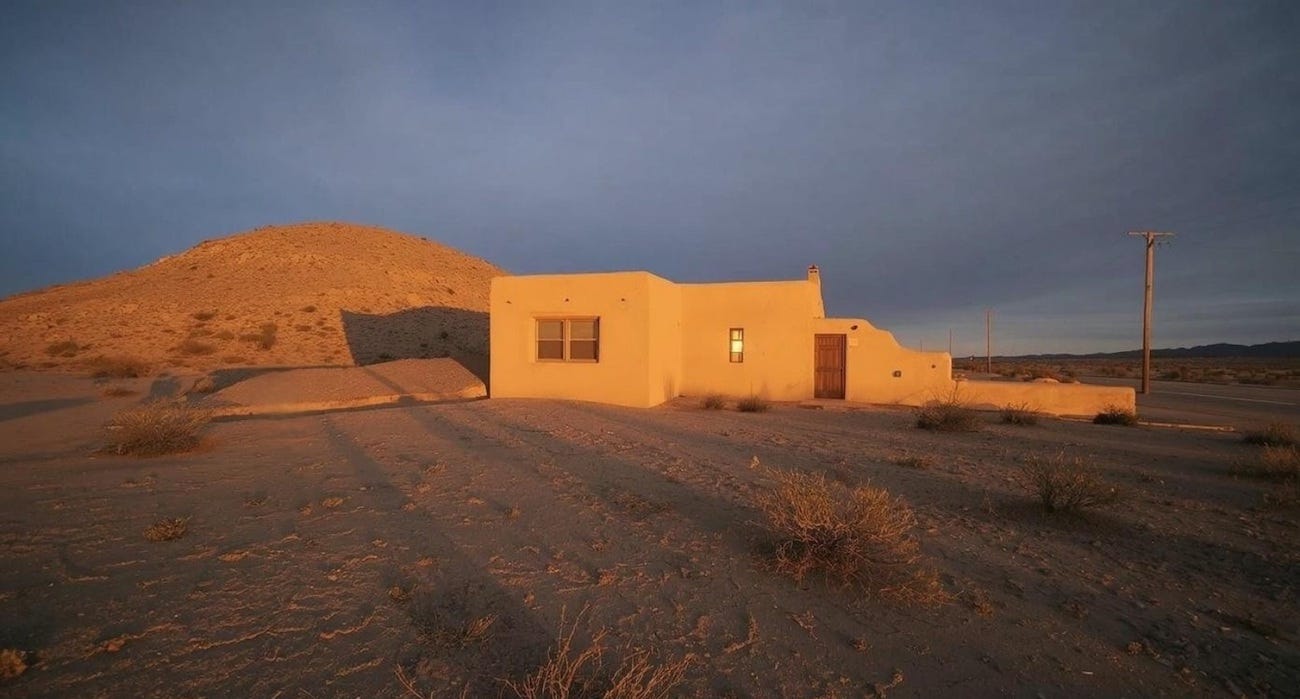
The road into the mesa valley was empty except for wind, sage, and the long shadow of my rental cutting across the dirt. The adobe casita sat alone against the open land, its walls the same soft red as the hillside behind it. Late-afternoon light hit the surface at an angle that made the clay look warm enough to touch even before stepping out of the car.
Inside, the air held the day’s stored heat. Thick walls, cool tile floor, a small window facing west — everything built to hold what the sun gave. I set my bag down and walked through the single room. The quiet wasn’t dramatic; it was simply the absence of anything unnecessary.
As the sun dropped, the colors shifted quickly. The hills turned russet, then violet. Shadows stretched thin across the packed earth, the kind that make the world feel wider. I stepped outside and stood in the last warmth, letting it settle on my skin. Evening comes fast in places like this; the desert doesn’t linger.
A pickup appeared on the road, its headlights off, moving slow — not cautious, just familiar with the land. Dust rose behind it in a thin, silvered line. The engine’s low hum was the first sound I’d heard since arriving. It passed without hurry, the driver a silhouette with one arm on the window frame. A wave, barely a lift of the hand. Then it was gone, dust falling back to earth in its own time.
The quiet returned, but not as it had been. The truck’s brief presence made its absence more noticeable, like a reminder that even in wide open spaces, people carve their own routes through the light and heat. I watched the dust settle until the air cleared again.
I followed the slope behind the casita just far enough to see the ridge catch its final line of sun. The light broke over the mesa in a thin, bright edge before dropping away, leaving only the outline of stone and brush.
Night deepened fast. The adobe that had held warmth now released it slowly, the cool coming in at the corners first. Inside, the lamplight fell clean against the pale plaster, showing the faint unevenness of the hand-built walls. I boiled water for tea, listening to the soft hiss of the flame. The smallest sounds seemed louder in the stillness — the kettle settling, a loose shutter tapping once, the faint crackle of cooling clay.
I opened the window to let in the desert night. The sky was sharp and full of stars, the kind you only see far from towns. Their light felt colder than the darkness around them. I sat on the low adobe bench by the wall, letting the warmth behind me fade inch by inch.
Before sunrise, I woke to a thin blue light spreading across the room. The temperature had dropped, crisp enough to make me tighten my blanket. Outside, the ground held a soft frost near the grasses. The adobe walls that had been warm to the touch last night were cool now, the cycle complete.
I walked a short path behind the casita, toward a rise where the mesa opened west. The sun broke clean over the ridge, gold at first, then white. The light revealed everything exactly as it was — brushed stone, dry brush, a fence line running long and straight. The day ahead would be hot again, but in the morning it all felt new.
The casita glowed in the early light, the red clay turning soft orange. I stood there until the sun reached my feet. The desert has a way of showing its shape one color at a time. Even after I left, I could still see that light — steady, simple, unfiltered.
Guide Note from Cal — Evi writes with a crisp, attentive voice that lingers on light, texture, and the shape of a place. This piece marks her first stay for Stay Notes.