
Last Stop

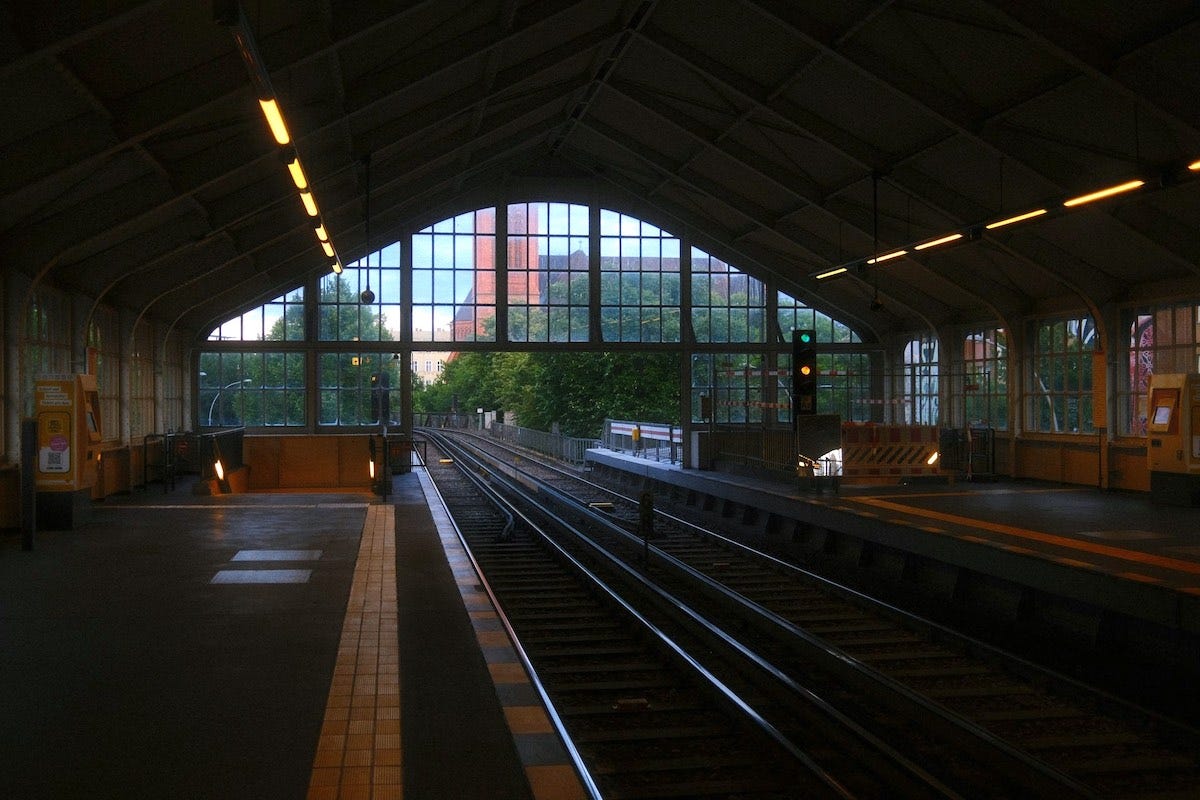
By the time I reached the platform, the station had already changed its mind about the day.
The crowds were gone, or nearly so. The board above the tracks listed only a handful of departures, their times spaced farther apart than the names themselves suggested. The benches held more space than people. The air felt stretched, as if the city had exhaled and not yet breathed back in.
This wasn’t the last stop on the map — just the last one that felt certain.
Beyond the platform, the tracks ran straight for a while and then disappeared into a darker shape, where lights no longer followed. There were no signs explaining what came after. From here on, movement continued without rails or stations — not stopped, just no longer gathered.
A janitor moved slowly along the platform, sweeping in long, deliberate arcs, careful not to rush the quiet away. Farther down, a light came on overhead, settling into an even glow across the concrete. Small kindnesses, easy to miss. A place designed for passing through still being tended.
An announcement echoed through the station, thin and distant, naming times without urgency. No one hurried. The people waiting here already seemed aligned with the pace of what would come next — slower, longer, less explained.
Standing there, it was clear that this stop existed for the act of leaving. Not dramatically. Not decisively. Just quietly, as one form of movement gave way to another.
This was the last stop before everything began to move in different directions.
When the train arrived, it did so without spectacle. Doors opened. A few people stood. A few stayed seated, watching the platform the way you watch a shoreline recede — not because you need to, but because it feels right to witness the moment.
The train waited. The station held its light. Nothing insisted.
Then movement resumed, steady and unremarked.