
Old Inn History
Where time settles into the wood and stays awhile.

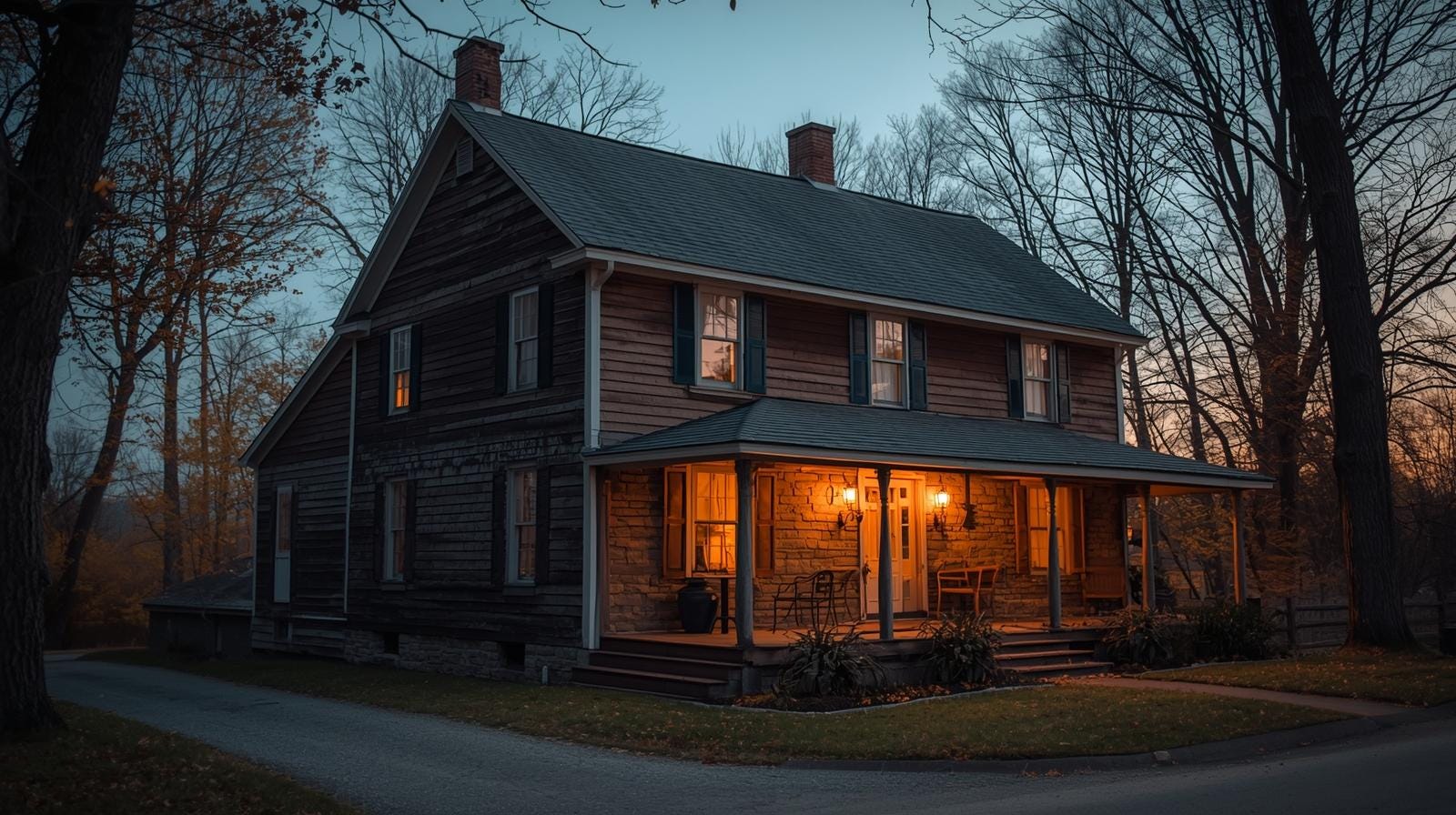
The inn sat just beyond a bend in the river, its windows facing the slow water as they had for longer than anyone working the desk could say. When the wind came through the valley, the structure answered with a low, familiar creak. It was late autumn in Pennsylvania, the kind of evening where daylight fades early and the air carries a quiet weight.
Inside, the floors sloped gently, worn smooth by a century of footsteps. The stair rail had been polished by hands that had come and gone—travelers, families, workers passing through—each leaving a trace without knowing it. The walls held photographs in simple frames: black-and-white portraits of the building in earlier years, the same porch, the same windows, a different generation leaning against the posts.
I checked in without ceremony. The clerk slid a brass key across the counter and nodded toward the stairs. “Second floor,” she said, as if that instruction had been given a thousand times before—and likely had.
My room faced the river. From the window, I could see water moving steadily past bare branches and stone banks. The radiator ticked softly as it warmed. Somewhere below, a door closed. The sounds weren’t intrusive; they were reassuring—evidence that the place was alive in a quiet, practiced way.
The room itself was spare: a wooden bedframe, a small desk, a lamp with a linen shade that softened the light. Nothing felt staged. Nothing asked to be admired. It was the kind of room that had been slept in many times and would be slept in many times again.
Downstairs, the common room held a fire that had been tended earlier, its warmth already settled into the space. Chairs were arranged not for display but for use, angled toward one another as if conversation had paused and might resume at any moment. A guestbook lay open on a side table, its pages thick with handwriting—some careful, some hurried, dates stretching back decades.
I read a few entries. Most were simple. Warm stay. Kind people. We’ll be back. The repetition felt less like cliché and more like continuity.
Later that evening, I stepped outside onto the porch. Light pooled near the door, softening the worn boards beneath my feet. Across the river, a few homes showed the same gesture—lamps glowing against the dark, windows marking where people had settled in for the night.
It struck me then that places like this endure not because they are grand, but because they are consistent. They keep the light on. They remember how to receive someone without asking much in return.
Back inside, the stairs announced each step with a familiar creak. I imagined all the other evenings those sounds had accompanied—boots shaken free of snow, suitcases carried carefully, tired bodies finding their way to rest. The inn didn’t distinguish between them. It held everyone the same.
In the morning, the river was pale and steady beneath a low sky. Breakfast was simple—coffee, toast, quiet conversation at neighboring tables. A man folded his paper. Someone laughed softly near the window. The day moved forward without urgency.
When it was time to leave, I paused at the door. The lights were still on, though the morning had fully arrived. It felt less like an oversight and more like habit—an understanding that someone might always be arriving just as someone else departs.
I stepped back onto the road with the sense that the inn would remain, doing what it had always done: offering shelter, keeping watch, remembering.
Guide Note: Some places carry history not as display, but as practice. This stay was inspired by inns that continue to welcome travelers, quietly and without ceremony.