
Sonoma Evening Light
After the harvest, a valley exhales

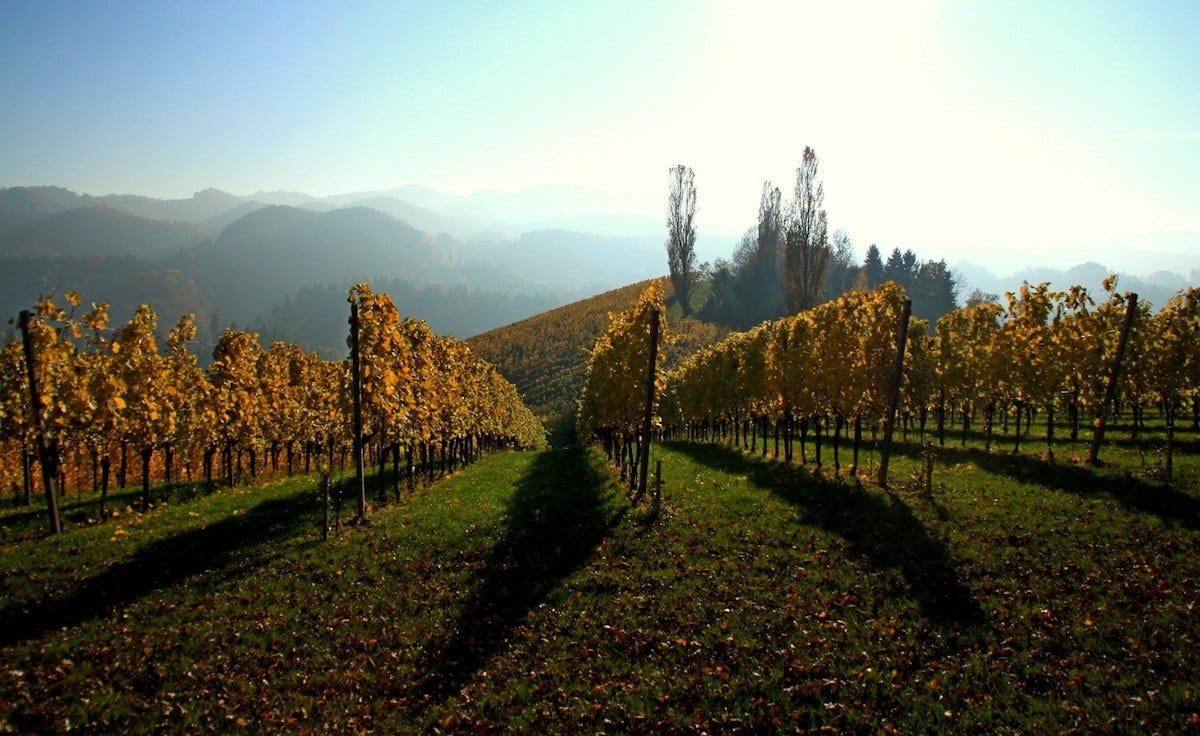
The first thing I noticed was the air — a soft blend of dust and sweetness that hung low over the vines. It smelled faintly of crushed fruit and sun-warmed wood, the kind of scent that lingers in the folds of a shirt long after you’ve gone home. The hills around the valley were still green, but their edges had begun to dull — that slow turn toward gold that signals summer’s end.
I’d arrived just after the harvest. The roads were lined with trucks carrying the last of the grapes, and there was a quiet pride in the faces of those who passed. They had worked the season to its finish. Now came the part where the land, and those who tend it, finally exhale.
The farmhouse sat halfway up a slope, its stone walls wrapped in ivy, the porch scattered with wicker chairs that creaked just enough to remind you of their age. My host, a man named Luca, greeted me with a smile that carried the ease of someone who had already done the hard work for the year. “You’re here for the quiet part,” he said, handing me a glass of something deep and red.
He was right. The quiet was the reason I’d come.
In the mornings, mist pooled between the rows like breath caught in a pause. The vines stood in disciplined lines, their clusters gone, their leaves thin and curling. I’d walk between them, hearing the crunch of soil underfoot and the soft hum of bees that hadn’t yet moved on. From a distance, the valley looked suspended — like a photograph taken just before motion resumed.
Luca’s wife, Emilia, ran the kitchen. Each afternoon, she’d appear in the doorway with herbs clutched in one hand, sleeves rolled high, calling out that lunch was ready. Meals here weren’t rushed. They unfolded. A bowl of soup, a loaf of bread still warm, figs drizzled with honey. Conversation wasn’t the point — it was presence. Between bites, there was quiet. Between words, you could hear the flies circling the fruit bowl and the clock ticking softly from the next room.
By late afternoon, the light turned thick and golden, settling over the vineyard like a slow pour. The sun would catch on the dust rising from the drive, turning it into haze, then fade behind the western ridge. It was a kind of theater, simple and ancient — one the valley had performed long before anyone was here to name it.
That evening, I sat on the porch with a notebook, trying to describe the color of the light but failing. It wasn’t gold, exactly. Not amber. It was the color of endings that aren’t sad — the hue of completion, of something that’s given all it can for now. I closed the notebook and just watched instead. Sometimes words only get in the way.
Later, Luca joined me with two small cups of warm tea. “To the season,” he said. We lifted them toward the darkening hills, and I realized the toast wasn’t about what had been gathered, but what had endured — the hands, the patience, the waiting.
A wind came down from the hills, carrying the smell of earth and distant woodsmoke. Somewhere a dog barked, and a few lights flickered on across the valley. The world had gone soft around the edges.
That night, I slept with the windows open. Crickets stitched their rhythm through the dark, and once, near midnight, I heard the faint murmur of voices from the porch below — Luca and Emilia, talking in low tones, the kind of conversation that only comes after years of working the same ground together.
When morning came, the air had changed again — cooler now, with a sharper scent. I poured a cup of coffee and stood outside, watching steam rise from the mug into the thin light. The vines were motionless, resting. In their stillness, there was a lesson I could almost grasp but not yet name.
That lesson would come later, on the drive north, when the road curved away from the valley and I looked back one last time to see the morning sun spilling over the hills — soft, forgiving, steady.
If you enjoyed this piece…
Stay Notes is a travel journal about quiet places, memorable stays, and the kind of calm you carry home.
Guide Note — Written after a week in Sonoma, where I learned that the quiet following harvest has its own kind of grace.