

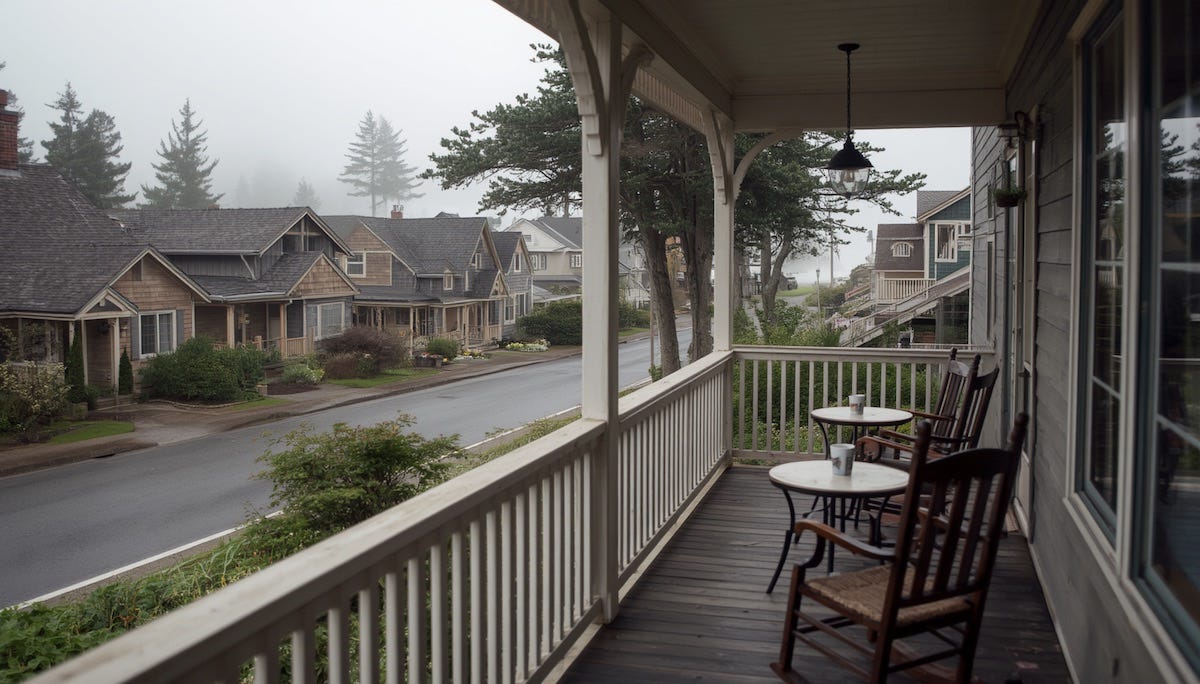
The inn sat only a block from the shoreline, close enough that the ocean was usually heard before it was seen. Between them stood a handful of cottages, a café that opened early each morning, and quiet streets where people moved more by habit than itinerary.
It wasn’t the sort of place that announced itself. Cedar shingles had weathered to soft gray, flower boxes rested beneath the windows, and a broad wraparound porch gathered the gentle activity of the day. Guests lingered over coffee after breakfast, hikers adjusted their packs before setting out, and damp jackets often found their way across the porch railing after returning from the coast.
Inside, the rooms were simple without feeling sparse. Wood floors carried the creaks of an older building, windows admitted generous light even beneath overcast skies, and shelves held field guides alongside novels left behind by previous travelers. Near the front desk, a handwritten tide chart hung beside a small collection of local trail maps, updated each morning by whoever happened to be working.
— - —
By the second day, it was easy to understand why people stayed longer than they first intended.
Yachats moved at a pace that rarely asked anyone to hurry. Breakfast might become a conversation with another guest about yesterday’s tide pools. A walk to the bakery became an excuse to wander another block toward the harbor before returning with pastries still warm from the oven. Even the changing weather seemed to encourage patience rather than interruption. Morning mist often yielded to brighter afternoons, while evenings settled quietly beneath a blanket of marine air.
The town felt lived in rather than presented.
Garden fences leaned comfortably into narrow lanes. Shopkeepers greeted familiar faces by name. Boots rested outside doorways beside pots of lavender, and bicycles appeared wherever there happened to be an empty fence post. The ocean was never far away, yet neither was the forest. Together they shaped the rhythm of nearly every day.
— - —
One morning, while coffee cups still warmed the porch rail, another guest remarked that the clouds were lifting toward Cape Perpetua. The innkeeper looked briefly toward the sky before smiling.
“It might be a good day to head south.”
That was recommendation enough.
The drive followed the shoreline only a few miles before climbing gently through dense stands of spruce. The ocean disappeared behind the trees, then returned unexpectedly at a roadside overlook where waves folded endlessly against dark basalt below. There was no schedule to keep, so the stop lasted longer than expected.
Farther along, a forest trail carried the scent of cedar, moss, and damp earth. Ferns crowded the edges of the path, while filtered light drifted through towering evergreens overhead. The trail descended gradually until the trees opened onto a quiet stretch of shoreline where tide pools reflected the afternoon sky. A few families explored the rocks with careful steps, children crouching beside small pools while photographers waited patiently for shifting light.
No one seemed eager to leave.
Continuing south, the road eventually reached the lighthouse standing watch above the Pacific. Wind moved steadily across the headland, carrying the familiar sound of surf far below. Visitors wandered the grounds without urgency, pausing more often to watch the changing coastline than to photograph it.
By late afternoon, turning back toward Yachats felt less like ending the day than returning home.
— - —
The porch welcomed familiar faces once again. Someone read beneath a light blanket despite the cool air. Another couple compared notes about beaches discovered farther north. Fresh mugs of tea appeared beside well-worn books while the café across the street stacked chairs for the evening. One by one, windows around town began to glow as the light softened over the rooftops.
It was easy to sit a little longer.
— - —
If the Oregon Headlands are best understood as a connected landscape of changing weather, forests, cliffs, and sea, Yachats is one of the places where that landscape becomes comfortably personal. A few days here are enough to watch the coast change moods several times over, not by chasing new destinations, but by returning each evening to the same quiet porch and beginning again the next morning.
Some places ask to be explored.
Yachats gently teaches the pleasure of staying.
From the Journal
This Stay is part of our Oregon Headlands series. If you’re new to this stretch of coast, begin with Along the Oregon Headlands, a broader portrait of the region that inspired this stay.
Guide Note
Yachats makes an ideal base for experiencing the central Oregon Coast. Cape Perpetua, scenic overlooks, forest trails, tide pools, and the historic lighthouse are all close enough to enjoy without feeling rushed. The town rewards travelers who leave room in their schedule for unplanned stops and quiet evenings.
Stay Note
This story is inspired by the character of Yachats and the small inns that have welcomed travelers along the Oregon Coast for generations. Rather than portraying a specific property, it reflects the atmosphere shared by many of the town’s independently owned coastal lodgings.
Guide Tips
Plan at least three nights to experience both clear skies and coastal mist.
Pack a light waterproof jacket and sturdy walking shoes, regardless of season.
Begin mornings on foot before driving anywhere—the town reveals itself best at walking pace.
Keep your afternoon flexible; the stretch between Yachats and Cape Perpetua is filled with overlooks and short trails that are easiest to enjoy without a fixed itinerary.
Planning Your Journey
A Thoughtful Guide to the Oregon Coast - Hearthline ↗
Practical guidance for choosing where to stay, understanding the regions of the coast, and planning an unhurried journey.